
The Union Budget of India is one of the most closely watched annual events for investors and traders across the country. Beyond being a financial statement of government income and expenditure, the Union Budget is a powerful policy document that sets the economic direction for the upcoming fiscal year.
From a stock market perspective, Budget Day is known for heightened volatility, sharp intraday swings, and sudden sector-specific movements. Market participants react not only to headline announcements but also to subtle policy cues delivered during the Finance Minister’s speech.
Historically, the Indian stock market behaves like a pendulum on Budget Day, swinging rapidly as traders interpret every sentence in real time. Understanding what truly drives these movements is essential for anyone tracking the Union Budget’s impact on the stock market.
Why the Union Budget Matters to Stock Market Participants

The Union Budget influences the stock market through multiple channels—corporate earnings expectations, fiscal discipline signals, government spending priorities, and investor sentiment.
For traders and investors, Budget Day is less about predicting exact numbers and more about understanding how market participants position themselves ahead of the event—and how policy signals can influence capital flows, sector performance, and the broader market direction.
This distinction is crucial, especially in the days leading up to the Budget, when expectations often matter more than the announcements themselves.
Over the years, Budget announcements have triggered:
Sudden rallies in select sectors
Sharp intraday reversals
Short-term corrections driven by disappointment or uncertainty
This is why Budget Day consistently ranks among the most volatile sessions in the Indian equity markets.
Key Factors That Drive Stock Market Reaction to the Union Budget

While many headlines dominate media coverage, the stock market typically focuses on three core elements of the Budget.
1. Taxation Policies and Their Market Impact
Changes in taxation policy directly affect both corporate profitability and consumer spending power. As a result, tax-related announcements are among the most closely tracked aspects of the Union Budget.
Market participants pay special attention to:
Direct Taxes, such as Income Tax and Corporate Tax
Indirect Taxes, including GST and Customs Duties
In addition, investors closely monitor any changes in:
LTCG (Long-Term Capital Gains) tax
STT (Securities Transaction Tax)
These directly influence trading costs, investment returns, and market participation. Even small tweaks in capital gains taxation can alter investor behavior and impact market liquidity.
2. Fiscal Deficit Targets and Market Confidence
Another critical driver of stock market reaction is the government’s stance on fiscal discipline.
The fiscal deficit, defined as the gap between government expenditure and income, plays a vital role in shaping:
Inflation expectations
Interest rate outlook
Bond yields
Currency stability
If the fiscal deficit target is perceived as too high, markets often react negatively due to concerns over:
Rising inflation
Increased government borrowing
Potential pressure on interest rates
Conversely, a disciplined fiscal roadmap tends to boost investor confidence and support equity markets.
3. Sectoral Allocations and Government Spending Priorities
Sector-specific announcements are often the most visible outcome of the Union Budget. Government spending priorities can significantly influence stock prices in targeted industries.
Traditionally, sectors that attract strong market attention during the Budget include:
Infrastructure
Defence
Railways
Capital Goods
Green Energy and Renewables
When the government announces higher allocations or favorable policy support for these sectors, related stocks often experience sharp price movements, sometimes even during the speech itself.
Budget Day Volatility: Understanding the Technical Setup
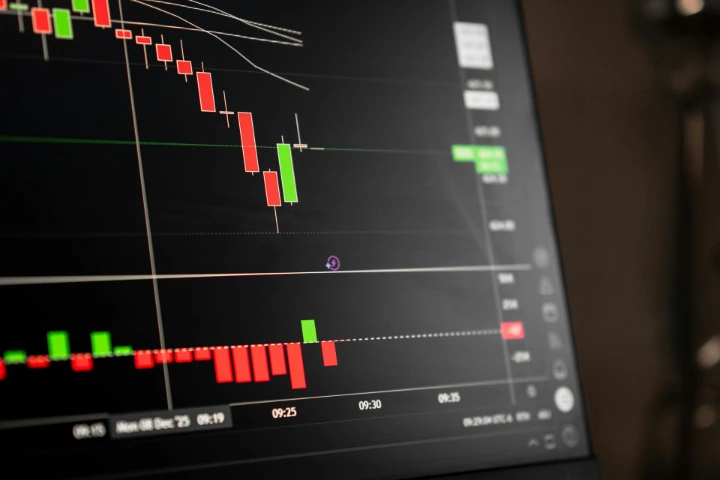
Beyond fundamental announcements, technical market behavior on Budget Day follows a fairly consistent rhythm.
The Whiplash Zone: 11:00 AM to 1:00 PM
The Budget speech typically creates a highly volatile trading window, often referred to by traders as the “Whiplash Zone.”
During this period:
Rapid price swings are common
Support and resistance levels are frequently violated
Breakouts often turn into false moves
Traders reacting impulsively during this phase may get trapped as prices reverse sharply once initial reactions fade.
The 2:00 PM Direction Shift
Historically, the actual intraday trend on Budget Day is often established after 2:00 PM.
By this time:
Major announcements are already digested
Noise from headline reactions begins to settle
Institutional investors such as FIIs and DIIs start positioning based on detailed policy interpretation
This phase tends to provide clearer directional cues compared to the earlier volatile session.
Budget Day vs Post-Budget Market Performance

Interestingly, historical data suggests that the week following the Union Budget often shows more meaningful trends than Budget Day itself.
Studies of past Budget sessions indicate that:
Budget Day returns are frequently volatile but inconclusive
The following week tends to reflect a more stable market direction
Average post-Budget weekly returns have been around +1.3% in several observed periods
This highlights the importance of patience and structured analysis over impulsive trading on the day of the announcement.
Common Market Reactions During the Union Budget

Some typical patterns observed during Budget Day trading include:
Initial optimism followed by sharp reversals
Sector-specific spikes based on allocation announcements
Increased volumes driven by short-term traders
Option volatility due to rapid price changes
Understanding these patterns helps traders and investors contextualize price action rather than reacting emotionally.
How Traders and Investors Can Interpret Budget Day Moves

The Union Budget should be viewed as a directional policy signal, not a guaranteed trigger for sustained rallies or crashes.
Market participants are better served by:
Observing sectoral reactions instead of chasing index moves
Allowing price action to stabilize before committing capital
Tracking institutional participation post-announcement
Budget Day is often about information processing, while meaningful trends emerge once clarity replaces speculation.
The Union Budget as a Market Catalyst

The Union Budget remains one of the most influential macroeconomic events for the Indian stock market. Its impact extends beyond a single trading session, shaping sentiment, sector performance, and medium-term expectations.
For traders and investors, success during the Budget season depends on:
Understanding core policy drivers
Respecting heightened volatility
Avoiding emotional decision-making during headline reactions
In the end, the Budget acts as a catalyst, not a conclusion. Markets take time to absorb policy signals, and informed positioning often proves more effective than instant reactions.
Disclaimer: We are not a SEBI-registered Research Analyst or Investment Advisor.
You are solely responsible for your trading decisions. Always perform your own due diligence or consult a certified financial planner before executing any trade.