
Why the Market Outlook Matters Right Now

The current market outlook today reflects a phase of indecision rather than direction. After the volatility surrounding recent macro events and Budget Day reactions, the Indian stock market has entered a tight consolidation zone. For traders and investors alike, this is not a market driven by conviction—but by patience.
At present, the stock market outlook in India is defined less by headlines and more by structure. Prices are moving within a narrow band, participation is selective, and momentum repeatedly fails to sustain itself beyond key levels. This makes it essential to understand the market we are in before deciding how to trade it.
This article breaks down the range-bound market structure, explains why trends are failing, and outlines what traders should realistically do until a decisive breakout or breakdown occurs.
Current Market Outlook: A Range-Bound Stock Market Environment
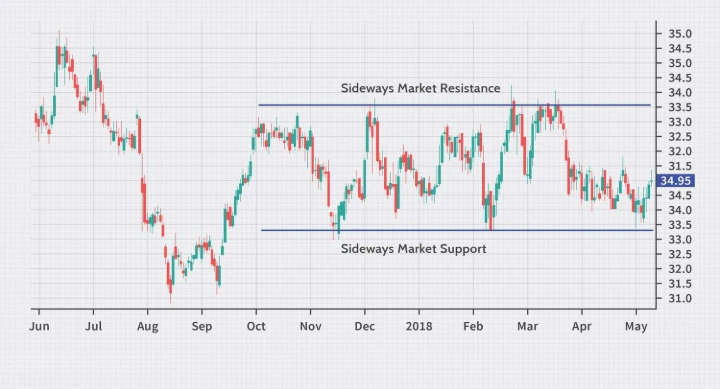
The defining feature of the current market outlook is consolidation.
Markets are presently boxed within a tight horizontal corridor, making them more suitable for short-term trading strategies rather than positional or trend-following approaches. Until price decisively exits this zone, directional bets carry a higher probability of frustration than reward.
A range-bound stock market typically emerges when:
Buyers are unwilling to chase prices higher
Sellers lack the conviction to push prices lower
Institutions wait for confirmation rather than anticipation
This “wait-and-see” environment turns the market into a playground for short-term traders while making life difficult for momentum followers.
Understanding the Trading Range: Key Support and Resistance Levels

From a structural standpoint, the market is currently trapped between two psychologically and technically important levels.
Upper Resistance Zone: 26,000
The 26,000 level represents a strong resistance area, marked by repeated failures to sustain upside momentum. This zone coincides with recent “celebration highs,” where optimism peaked but follow-through was missing.
Despite multiple attempts, bulls have struggled to establish acceptance above this level. Each rally toward resistance has faced selling pressure, indicating supply dominance rather than accumulation.
Lower Support Zone: 25,500
On the downside, 25,500 has emerged as a significant support level. This zone is anchored by the lows established around Budget Day, where buyers consistently stepped in to prevent deeper declines.
The repeated defense of this level suggests that downside risk is being actively managed—at least for now.
Together, these levels define a 500-point trading range, and as long as the price remains inside it, the broader market outlook today remains neutral rather than directional.
Why Trend Trades Are Failing in the Current Market

One of the most important observations in the Indian stock market outlook is the repeated failure of breakout attempts.
High-conviction moves near range boundaries are often followed by:
Exhaustion
False breakouts
Sharp intraday reversals
This behavior is characteristic of range-bound markets, where liquidity hunts replace trend continuation. Traders entering aggressively near resistance often find themselves trapped as prices reverse, while sellers pressing shorts near support face sudden bounces.
The result is whipsaw price action—a silent capital eroder for those trading with trend-following assumptions in a non-trending environment.
Strategy Insight: Patience Over Aggression

In a range-bound stock market, restraint is not a weakness—it is a strategy.
While price remains trapped within the 25,500–26,000 zone, committing large positions offers poor risk-reward. Instead, traders should focus on:
Smaller position sizing
Faster profit booking
Clear invalidation levels
Capital preservation becomes just as important as capital growth. In fact, surviving a consolidation phase with minimal damage often puts traders in a stronger position when the next real trend emerges.
This is why the current market outlook demands discipline rather than boldness.
Market Outlook for Traders: What Works Inside a Range

Until the market reveals its next direction, traders are better served by adapting to the structure rather than fighting it.
Within a range-bound environment:
Selling near resistance and buying near support tends to outperform
Mean-reversion strategies work better than momentum trades
Intraday volatility offers opportunities, but only with tight risk control
The key is not to predict the breakout—but to remain flexible enough to respond when it finally arrives.
Looking Ahead: The Breakout Catalyst That Will Change the Market Outlook
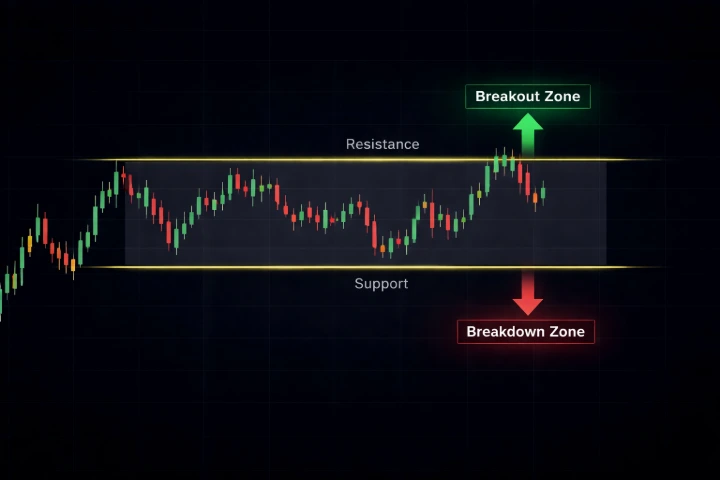
Every consolidation eventually resolves—but timing that resolution is notoriously difficult.
What matters more than prediction is recognition.
A decisive move outside the 25,500–26,000 range—with volume and follow-through—will likely provide the momentum needed to define the next phase of the Indian stock market outlook.
Upside Breakout Scenario
A sustained close above 26,000 could signal:
Renewed bullish momentum
Improved risk appetite
Stronger institutional participation
This would shift the market outlook today from neutral to constructive.
Downside Breakdown Scenario
A breakdown below 25,500 could:
Trigger stop-losses
Invite deeper corrective moves
Increase volatility
In this case, defensive positioning would become essential.
Until one of these scenarios materializes, the market remains in evaluation mode, not expansion mode.
Bigger Picture: What This Market Phase Is Really Teaching Traders
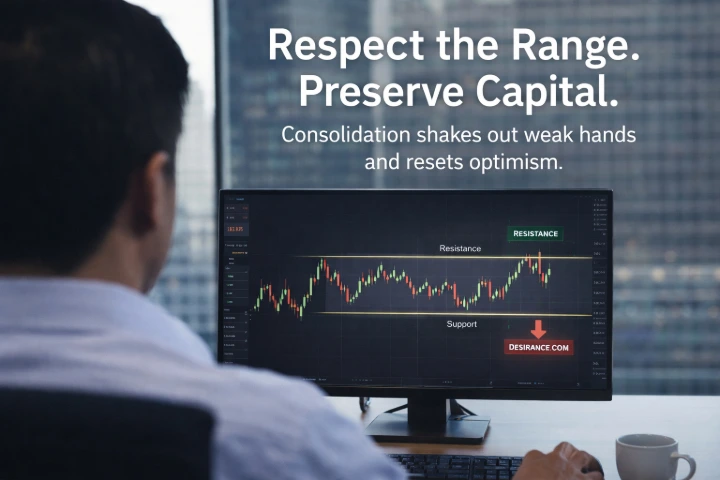
Periods of consolidation are often misunderstood. They feel unproductive, frustrated, and directionless—but they serve a crucial role in the market cycle.
They:
Reset excess optimism
Shake out weak hands
Prepare the ground for sustainable trends
The current stock market outlook in India is less about making fast money and more about staying aligned with structure.
Those who respect the range will preserve capital. Those who force direction will donate it.
Reading the Market, Not Forcing It

The market outlook today is clear in one respect—it is not yet ready to trend.
As long as prices remain locked between support and resistance, patience should guide positioning. The real opportunity will not come from predicting the breakout, but from recognizing it when it arrives.
Until then:
Stay nimble
Keep position sizes manageable
Let the market reveal its intent
In range-bound markets, discipline is not optional—it is the edge.
Disclaimer: We are not a SEBI-registered Research Analyst or Investment Advisor.
You are solely responsible for your trading decisions. Always perform your own due diligence or consult a certified financial planner before executing any trade.